
Last updated November 14, 2026
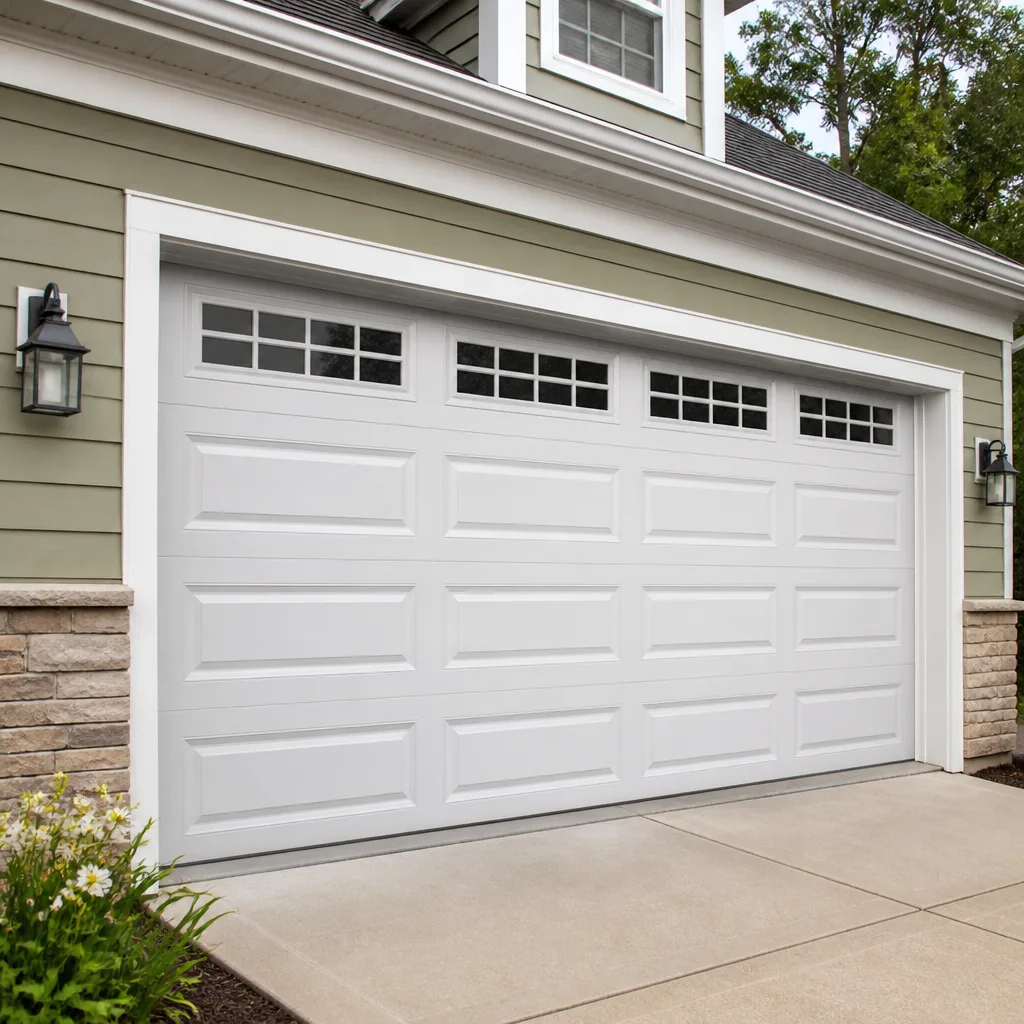 Raised-panel steel
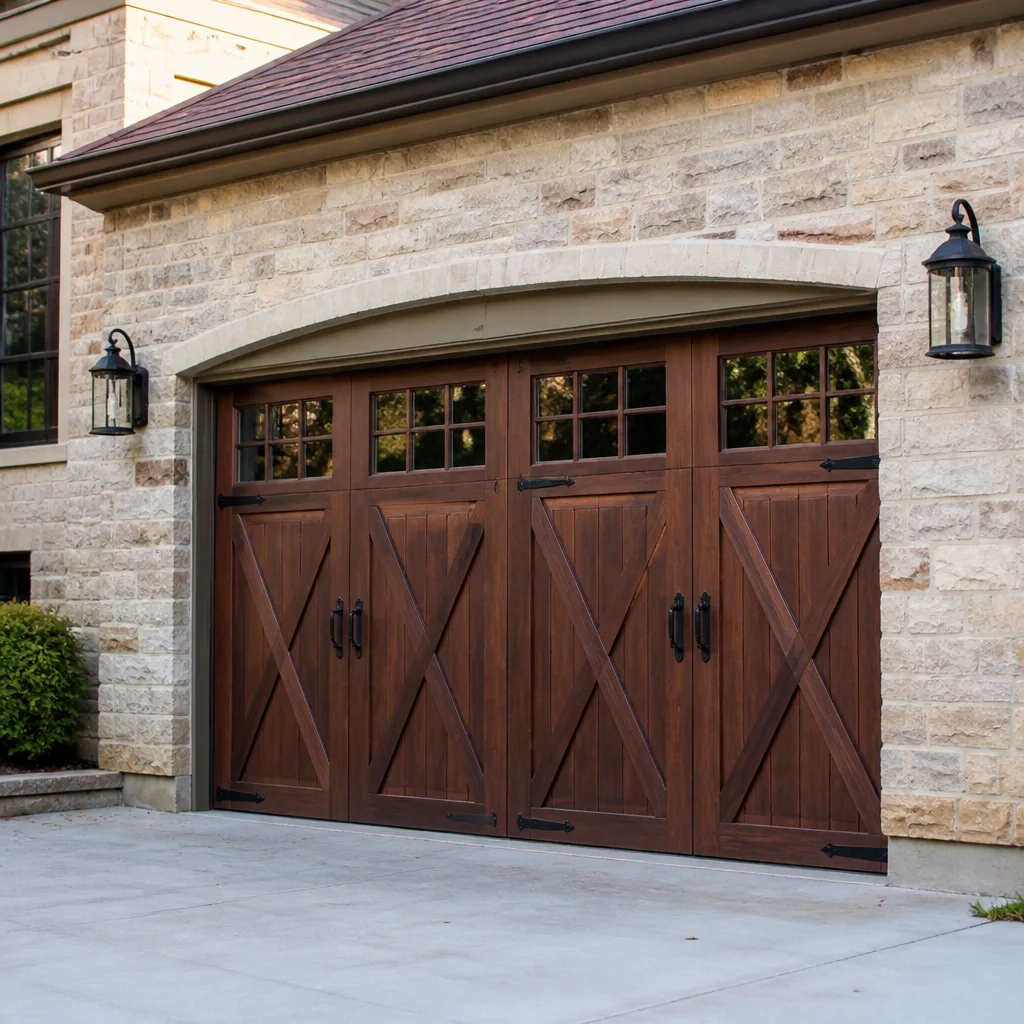 Carriage house
 Modern flush
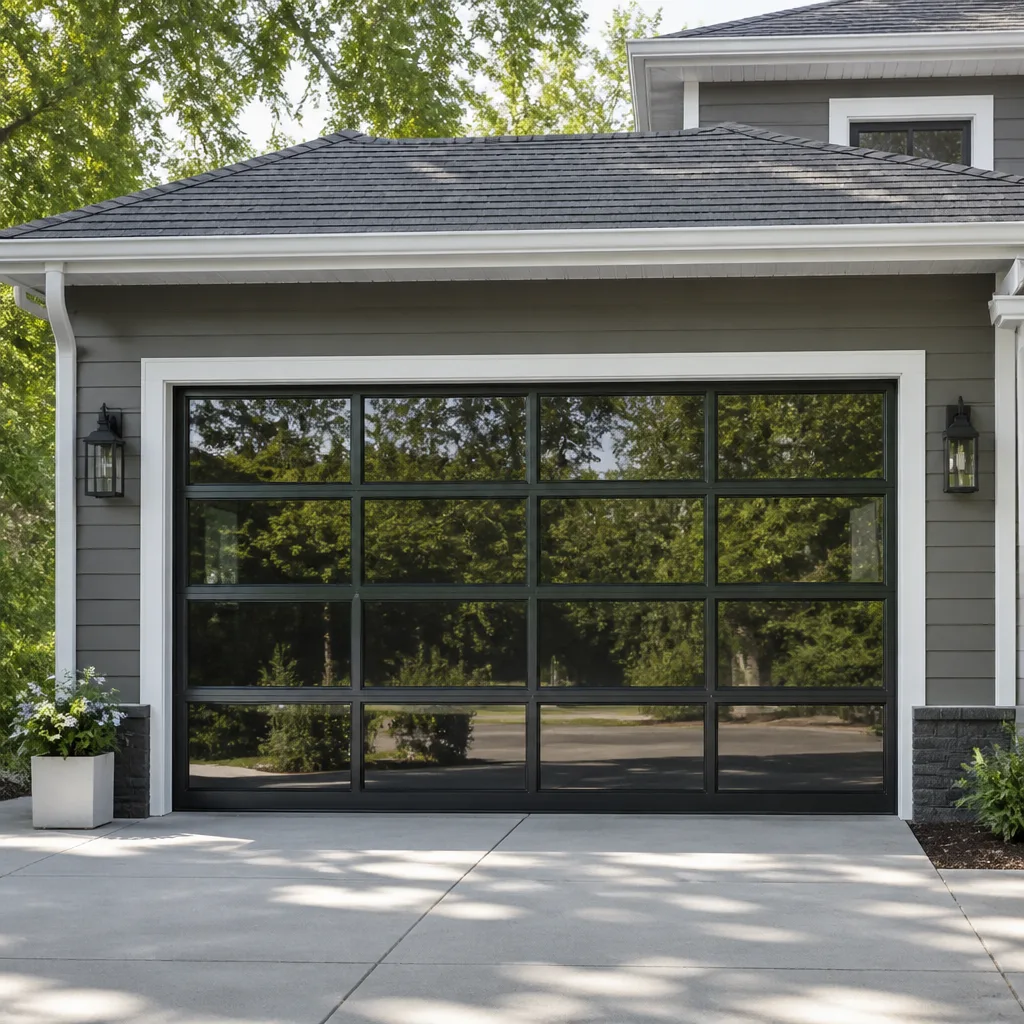 Full-view glass
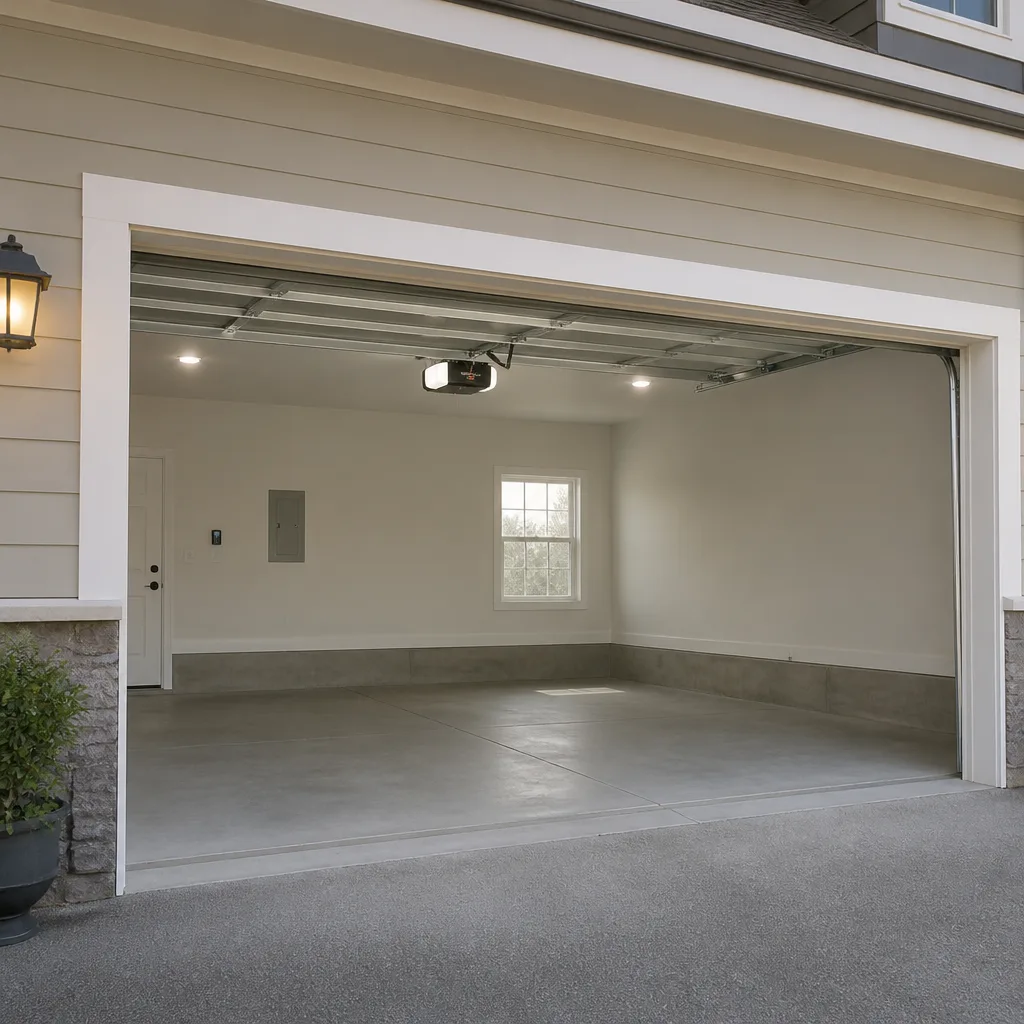 LiftMaster openers
 Chamberlain openers
Full 25-point door and opener safety check with every visit - springs, cables, rollers, tracks, and your LiftMaster or Chamberlain opener included
You get a price before we start. It does not change when the truck arrives.
Get your free estimateHow to Hire a Garage Door Contractor in Richmond: A Step-by-Step Guide
The license question is the one almost every Richmond homeowner asks first, and it’s the right place to start. But a California C-61/D-28 specialty license is a legal threshold, not a knowledge test. Any contractor can pass it while knowing nothing about your Amarr or Wayne Dalton door, how your opener’s travel limits work, or what Richmond requires when you replace a motor on an attached garage. The credential tells you someone can be hired legally to do the work; it says nothing about whether they’ve ever laid hands on your system. This guide walks through what to actually verify, the questions that separate a specialist from a generalist, and how to read the estimate so nothing shows up on the invoice that wasn’t quoted.
Quick Answer
Hiring a garage door contractor in Richmond means verifying an active C-61/D-28 license on the Contractors State License Board (CSLB) site, then interviewing for brand-specific expertise: can they identify your door’s make, your opener’s model, and the parts your system actually uses? A written, itemized estimate, confirmed before any work starts, is your real protection. The license proves they can work in California; the interview proves they know your door.
Styles & brands we work with
- Raised-panel steel
- Carriage house
- Modern flush
- Full-view glass
- LiftMaster openers
- Chamberlain openers
Table of Contents
- Why the License Question Is Necessary but Not Enough
- How to Verify a Contractor on the CSLB Website
- Five Brand-Specific Questions to Ask Before You Book
- Permits and Code in Richmond: What to Ask Your Building Department
- How to Read a Written Estimate and Spot Missing Line Items
- Manufacturer-Authorized Dealer vs. Independent Specialist
- Red Flags Specific to the Richmond Market
- Common Mistakes to Avoid
Why the License Question Is Necessary but Not Enough
California issues garage door work under the C-61/D-28 specialty classification: “Door and Gate Installation and Repair.” It’s a real credential, and you should absolutely check it. What it covers is legal eligibility to contract for that work in this state. What it doesn’t cover is whether your technician knows a Clopay spring system from a generic one, or how to diagnose a Genie opener ride-height calibration issue instead of swapping the unit.
We’ve watched Richmond homeowners treat “licensed and insured” as the whole checklist and stop there. It’s a good first gate. It just doesn’t measure the thing you’re actually paying for on the visit: whether the person at your door can diagnose brand-specific failure points instead of applying generalized troubleshooting to every system. Two licensed contractors can look identical on paper and be completely different in your garage.
The job itself has a few genuine hazards. Torsion springs are under high tension, and the cable runs alongside them can snap without warning. Neither is a safe project for a homeowner, and a contractor who shrugs off that risk or offers to “take a look and see if we can do it cheaper without the safety gear” is telling you something important. Treat the license and the insurance as your floor, then keep vetting.
How to Verify a Contractor on the CSLB Website
Verification takes about three minutes at the CSLB site. The license lookup is free and public. What matters is whether the license is active, current, and matches the person or company you’re talking to, not just that a number exists somewhere.
Here’s how to run the check, step by step:
- Ask the contractor for their license number in writing before the visit. A legitimate C-61/D-28 holder will provide it without hesitation.
- Look the number up on the CSLB website. Confirm the business name and license classification match what you were told.
- Check the license status. “Active” is what you want. If it has expired or been suspended, stop here.
- Read the complaint history. Some complaints are normal for any contractor; a pattern of unresolved issues or discipline is a reason to look elsewhere.
- Confirm liability insurance and workers’ compensation coverage. Ask them to email a certificate of insurance rather than just telling you a policy exists.
- Verify the insurance certificate matches the licensed entity. If the name on the certificate doesn’t match the license, ask why.
One more thing: the CSLB license is tied to a specific legal entity or individual. If the person knocking on your door works for a company, that company’s license is the one that matters. Ask for the legal business name, not just the trade name on the truck.
Five Brand-Specific Questions to Ask Before You Book
This is where specialists separate from generalists, and it’s the part of the process most homeowners skip. A C-61/D-28 holder who works mostly on one brand shouldn’t be diagnosing your system on your dime. Here’s what to ask on the phone or in the first five minutes of the visit. The answers don’t need to be perfect, but they should sound specific rather than rehearsed.
Ask these five questions:
- What spring is in a 16×7 standard-weight door, and how do you size it? A specialist will talk through the spring formula tied to door weight, width, and cycles required. A generalist will say “we’ll figure it out on site.”
- What opener brand is in this house, and what’s the known failure point for it? If they can’t name a LiftMaster or Chamberlain, a Genie, or a Craftsman’s known quirk (travel limits, logic board behavior, remote pairing procedure) without guessing, they’re not a specialist.
- What door make is this, and what parts are matching? Clopay, Amarr, Wayne Dalton, and Raynor each have telltale panel construction and hardware patterns. A specialist knows how each one is built and which replacement parts fit properly.
- What’s the header clearance on this door, and does the new door need a different spring configuration if the clearance changes? This is a question about the specific job in front of you, not the trade in general.
- What’s in the written estimate, line by line? If they can’t describe the items before you commit, they haven’t priced the job yet.
None of these require a technician to have worked on your exact door before. They require that they recognize the systems and the reasoning behind them. That recognition is the difference between a correct fix and a parts-swap-and-hope.
Permits and Code in Richmond: What to Ask Your Building Department
Permit questions are where out-of-area contractors get into trouble in Richmond. The rules are set by the City of Richmond’s building department, and they change from time to time, so verify specifics there rather than trusting a phone quote. Two consistent things worth knowing: motor replacements on attached garages commonly require a permit, and full door replacements almost always do.
Before you book, ask the contractor three permit questions:
- “Does this job need a permit in Richmond, and if so, who pulls it?” A specialist answers with reference to your specific job, not a generic yes or no. If they pull it, get the permit number in writing.
- “What’s the permit filing line in the estimate?” If it’s not itemized, the fee may show up later as a surprise. Any line item not written down before work starts is a line item you can’t contest after.
- “Who’s responsible for the inspection if one is required?” Some jobs need a final inspection; the estimate should say who handles scheduling it.
If a contractor tells you permits aren’t needed for a motor swap on an attached garage, that’s worth pushing back on. Ask them to confirm with the city’s building department and put it in writing. The permit protects you at resale, at insurance renewal, and if anything goes wrong. It’s not paperwork to skip.
How to Read a Written Estimate and Spot Missing Line Items
A written estimate is the whole ballgame. The price on the page is the price, and any line item not on the page is a line item that can appear later. Here’s what a complete estimate should include for a typical garage door job in Richmond:
The estimate should list, at minimum, the following items when relevant:
- The work diagnosis: what part failed and why (spring, cable, roller, hinge, panel, opener board or motor).
- The exact replacement parts and brand names, so you can confirm brand-matched parts rather than generic substitutes.
- The cost per item and the total for parts.
- Labor, itemized per job, not tucked into a lump sum.
- Track replacement, if any track section is being replaced rather than adjusted.
- Weatherstripping, bottom seal, or threshold replacement, if the current one is failing.
- Haul-away of old panels or parts, if they’re being removed. Ask directly, “Is haul-away included?”
- Permit filing fee, itemized separately from labor and parts.
- Final test and calibration of the opener, written as a line item so it’s guaranteed.
The price given on the estimate is the price. There’s no separate service-call fee that gets credited later or added on top; the estimate covers the job described, and the written estimate sets the final price. If the technician finds additional issues after arriving, you should see a revised written estimate before they start that extra work. Ask for it explicitly. If the scope changes, the paperwork changes first.
Manufacturer-Authorized Dealer vs. Independent Specialist
Both models can work for a Richmond homeowner, but they’re the right call in different situations. A manufacturer-authorized dealer is tied to one brand’s parts pipeline and warranty process: if you’re installing a new Clopay or Amarr door and want the factory warranty to be straightforward, an authorized dealer often makes the paperwork cleaner. A brand-agnostic independent specialist sees a wider cross-section of systems and tends to be the better call when your opener is one brand and your door is another, or when you’re repairing rather than replacing.
What matters more than the category is whether the contractor actually knows the brands in your garage. Multi-brand specialists trained across LiftMaster, Chamberlain, Genie, Clopay, Amarr, Wayne Dalton, Craftsman, and Raynor can diagnose the failure point specific to your system rather than fitting you to a single brand’s checklist. That’s what we mean when we say Silverline Garage Door Repair diagnoses the equipment, not just the symptom.
If you’re planning a new install, ask both types of contractors which brand they recommend for your home style, header clearance, and door weight, and why. A good answer ties to your specifics. A bad answer is “we only carry X.”
Red Flags Specific to the Richmond Market
Some quote-farming behaviors are worth watching for in the Richmond market specifically. Most of them show up in the first phone call, before you’ve paid anything, and they almost all point to the same underlying problem: someone quoting a job they haven’t sized.
Watch for these:
- A firm phone quote with no questions. A contractor who gives you a number without asking for door dimensions, opener model, spring type, or header clearance is guessing. Reputable contractors price by written estimate after measurements.
- Pressure to replace when repair is possible. New construction quotes on doors that just need a spring or an opener board are a red flag. Ask, “What’s the repair option, and what’s the reason you’re recommending replacement?”
- “We can do it without the permit.” For motor replacements on attached garages and full door replacements, permits are commonly required in Richmond. Skip the permit and you inherit the risk.
- Unbranded or generic parts with no model numbers. Brand-matched parts matter, especially on openers and spring assemblies. If the estimate won’t name the part, ask why.
- No written estimate before work begins. Verbal is not an estimate. Get it in writing, itemized, before any tool comes out of the truck.
- Warranty terms you can’t see. Ask for warranty terms in writing. If they won’t put them on paper, that’s a signal about how they handle callbacks.
- No insurance certificate. If they can’t email you a certificate of insurance, the job isn’t insured at the level you need.
Common Mistakes to Avoid
- Treating the license check as the whole job. A C-61/D-28 license is necessary, but it doesn’t prove brand knowledge. Interview for expertise on top of credentials.
- Accepting a phone quote without dimensions. Without door width, weight class, opener model, and header clearance, no legitimate contractor can actually price the job. Push for the written estimate.
- Skipping the insurance certificate. A verbal “we’re insured” isn’t verification. Ask for the certificate and confirm the entity name matches the license.
- Assuming permits don’t apply. Motor replacements on attached garages and full door replacements commonly need permits in Richmond. Confirm with the city’s building department before proceeding.
- Not reading for missing line items. Track replacement, haul-away, weatherstripping, and permit filing fees are the four that most often show up unquoted. Scan the estimate for each.
- Choosing on price alone from a single bid. Get at least two written estimates for anything beyond a minor repair. Comparing itemized scopes is the fastest way to spot one bid padding or hiding cost.
- Ignoring brand cues in a new install. Any install estimate should name the door brand and model (Clopay, Amarr, Wayne Dalton, Raynor) and the opener brand. Vague “standard door” language makes it impossible to compare bids fairly.
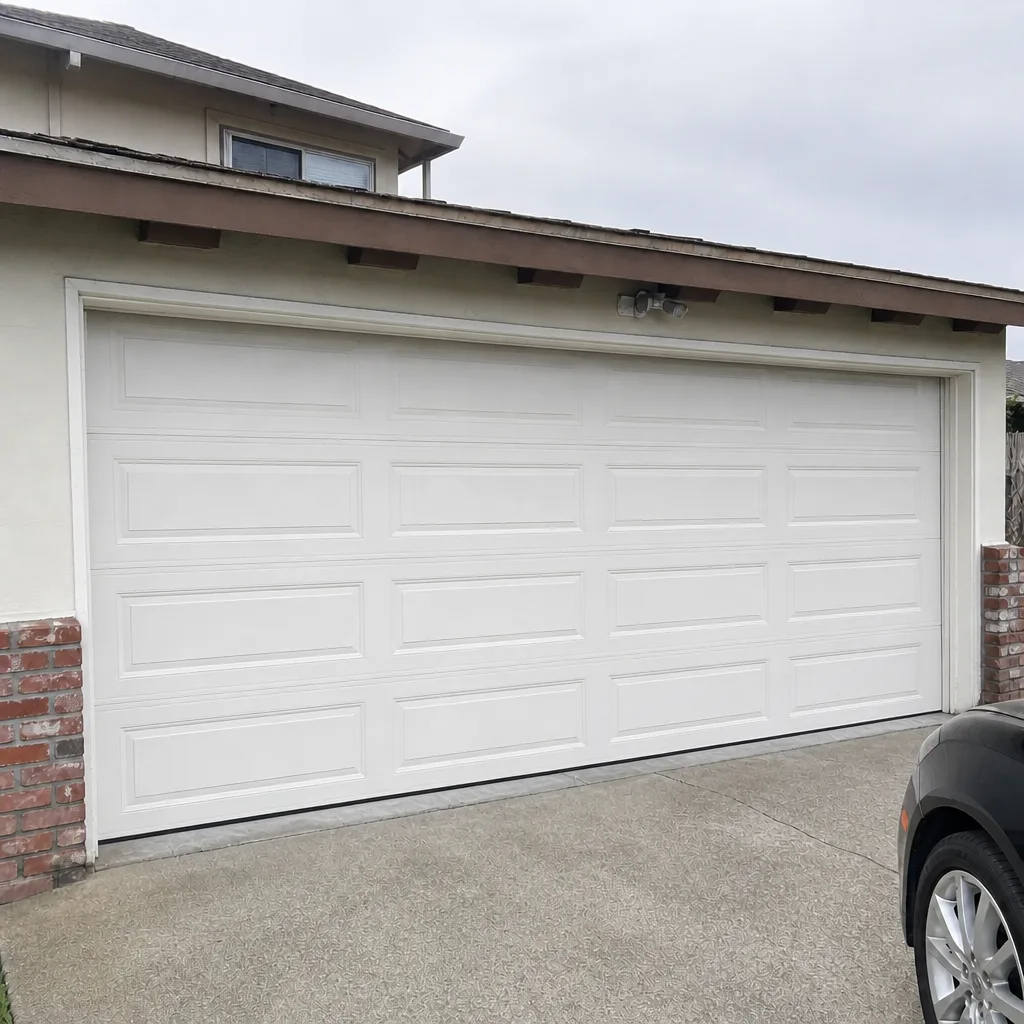
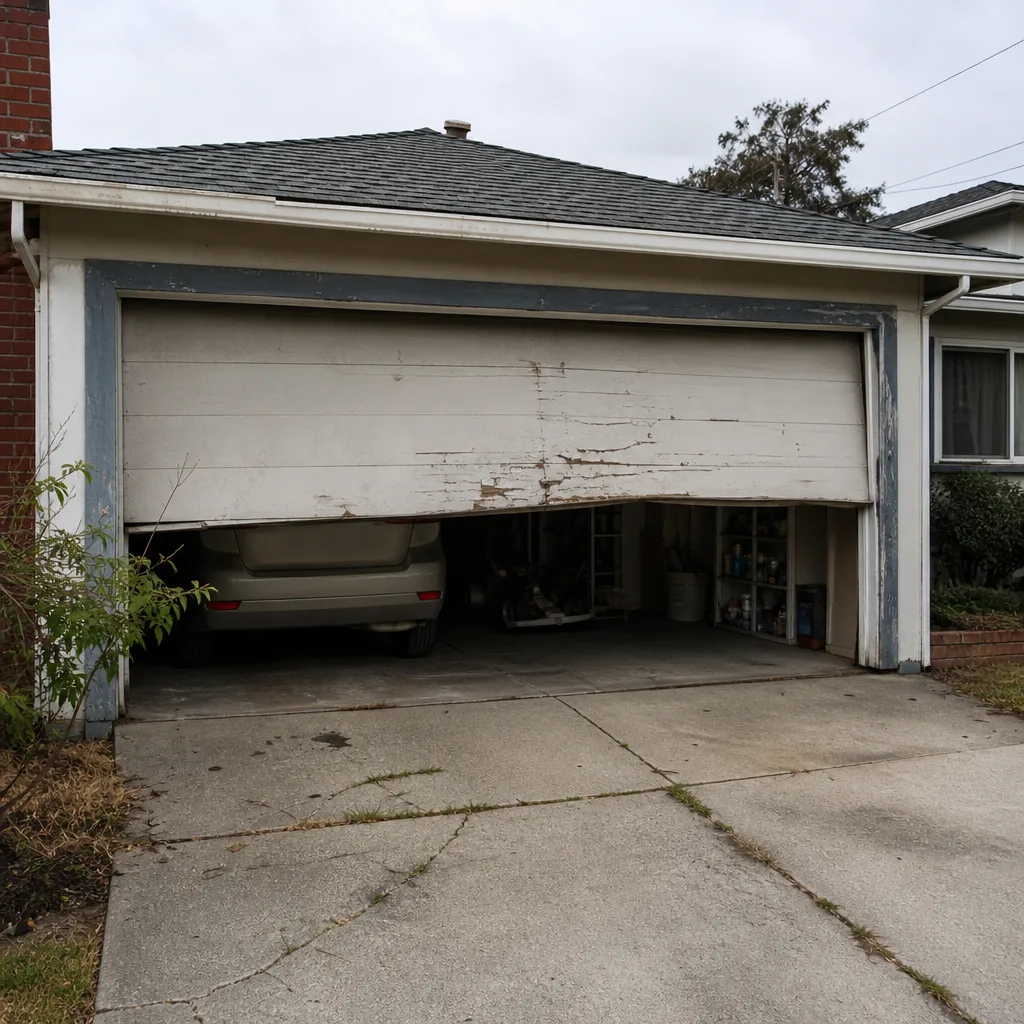
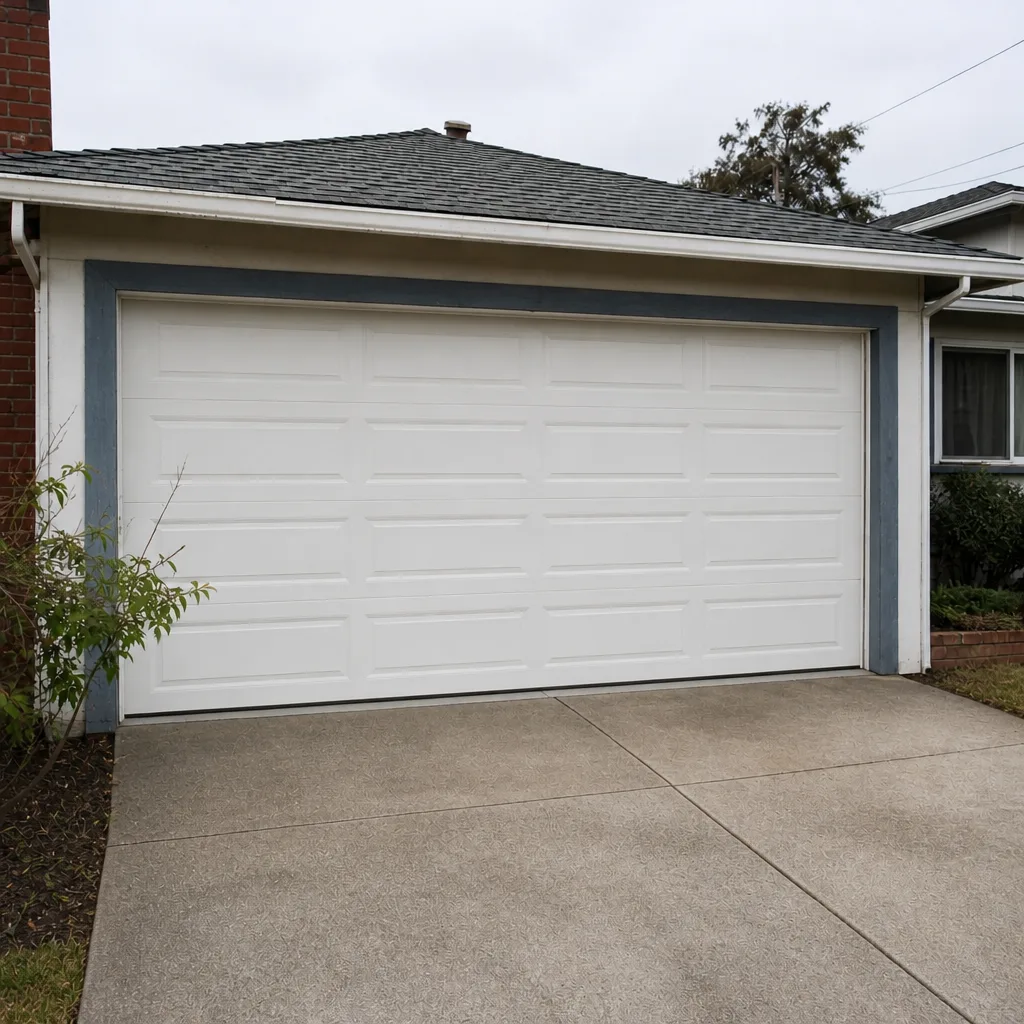
See the difference
 Before
 After
 Before
 After
 Before
 After
When to Call a Professional
Some jobs are obvious calls. A snapped torsion spring, a door off its track, a cable that’s jumped a drum, or an opener that’s stopped responding entirely are all jobs to hand to a specialist. Less obvious are the situations where the diagnosis matters more than the repair: an opener that reverses mid-travel, a door that feels heavier than it used to, or a system that’s making a sound it didn’t make last month. Those are the cases where brand-specific diagnostics save you money over a parts-swap guess.
If your door or opener is failing and you’re not sure what’s wrong, call for a free estimate before you buy parts. Silverline Garage Door Repair offers free estimates in Richmond. Call (833) 519-3675. We answer 24/7. Fast dispatch from 7am to 7pm, Sunday through Friday. If the phone rings outside dispatch hours, a call is booked into the next opening, Sunday through Friday, 7am to 7pm. Same-day service is available for repairs when the schedule allows; installations and replacements are measured and scheduled around your timeline, with a written price before work begins. From a broken spring to a full new installation, one call covers it. Learn more about our garage door repair service or our garage door opener repair specialty.
Frequently Asked Questions
Yes. Garage door and gate work in California is handled under the C-61/D-28 specialty classification, and contractors doing this work must be licensed and in good standing with the Contractors State License Board. Verify the license number on the CSLB website before booking. The license confirms legal eligibility; the interview confirms brand expertise.
A complete written estimate lists the diagnosis, exact replacement parts with brand names and model numbers, itemized labor, track and weatherstripping costs if relevant, haul-away, permit filing, and a final test and calibration line. Any line item not on the page can appear later. Ask for a revised written estimate if the technician finds additional issues on site. The written estimate sets the final price, so nothing gets added after the fact.
Surprise fees almost always come from line items the original estimate omitted. Scan for track replacement, haul-away, weatherstripping, and permit filing before you sign; if any of those are missing and the job involves them, ask the contractor to add them to the estimate in writing. If a fee shows up at the end of the job that wasn’t in the written estimate, you have grounds to hold the line. The estimate governs.
Yes, and you should. Ask which door brands and opener brands they work on regularly. A specialist can name a few without hesitation (Clopay, Amarr, Wayne Dalton, Raynor for doors; LiftMaster, Chamberlain, Genie, Craftsman for openers) and will talk through failure points. If they can’t name the brand already in your garage, they’re not the right fit for a brand-specific diagnosis.
Often yes, and it varies by job. Motor replacements on attached garages commonly require a permit in Richmond, and full door replacements almost always do. Confirm with the City of Richmond’s building department before proceeding, and ask the contractor who’s pulling the permit and where the fee is on the estimate. Permits protect you at resale and insurance renewal.
Either can work, and the right choice depends on the job. An authorized dealer is often the cleaner call if you’re installing a new single-brand door and want the warranty paperwork straightforward. An independent multi-brand specialist tends to be the better fit for repairs and for homes where the opener and door are different brands. What matters most is that whoever shows up knows your specific systems.
The Bottom Line
Hiring a garage door contractor in Richmond isn’t complicated once you know what to verify. Start with the C-61/D-28 license on the CSLB site, confirm insurance, and then interview for brand expertise: which door make is in your garage, which opener model, and which parts will be matched. Read the estimate line by line, ask about permits with the city, and get every change in writing before the work continues. If the contractor can name the specific equipment and put a written price in front of you, you’re dealing with a specialist.
If you’re ready to skip the guesswork, call Silverline Garage Door Repair at (833) 519-3675 for a free estimate. We answer 24/7. Fast dispatch from 7am to 7pm, Sunday through Friday. Free estimates, upfront pricing, and a written quote agreed before any work starts. We work across Richmond, CA and the surrounding area, with brand-specific expertise on the door and opener systems in your garage.
Written by the team at Silverline Garage Door Repair, serving Richmond since 2012.